
How Engineers Perfect Every Detail

Custom Forged Aluminum Wheels

Custom forged aluminum wheels are far more than a striking visual upgrade for vehicles—they are the pinnacle of precision engineering, where every curve, dimension, and material choice is the result of meticulous calculation, expert craftsmanship, and close collaboration between our engineering team and clients. Unlike mass-produced wheels, these bespoke pieces are not built to fit a generic standard; they are engineered to align perfectly with a vehicle’s unique specifications, performance goals, and the owner’s distinct vision, merging form and function at the highest level.
At the core of our custom forging process lies a client-centric engineering partnership. Our seasoned engineers don’t just manufacture wheels—they collaborate closely with every client, diving deep into their needs to confirm and refine every critical detail that defines a wheel’s performance, compatibility, and durability. No element is overlooked, as each specification plays an irreplaceable role in ensuring the wheel delivers on safety, efficiency, and reliability.

Fitment & Dimensions: Precision-Crafted for Seamless Compatibility

The foundation of any exceptional custom wheel is flawless fitment, and our engineers prioritize exactitude in every dimensional detail. We work hand-in-hand with clients to define and verify diameter, width, offset, and bolt pattern with micron-level accuracy. This precision ensures the wheel sits perfectly within the vehicle’s wheel well, avoids interference with brake components, suspension systems, and bodywork, and maintains optimal handling geometry. Whether it’s a performance sports car requiring aggressive offset for enhanced stability, or a heavy-duty vehicle needing specific width and bolt pattern to support its frame, every dimension is tailored to guarantee seamless, safe integration.

Material & Strength: Forged from High-Grade Aluminum Alloys

Strength without excess weight is the hallmark of premium forged wheels. We exclusively use high-grade aluminum alloys, most notably the industry-standard 6061-T6 aluminum alloy.Renowned for its outstanding tensile strength, toughness, and corrosion resistance, 6061-T6 is ideal for forging. Through a high-pressure forging process, the alloy’s internal structure is compacted and refined, effectively eliminating porosity and defects common in cast wheels.

Design & Style: A Harmonious Balance of Aesthetics and Structural Integrity

Custom wheels are a reflection of personal style, but beauty must never come at the cost of strength. Our design and engineering teams work in tandem to craft wheel styles that captivate the eye—from sleek, minimalist spokes to bold, intricate patterns—while adhering to strict structural engineering principles. Every contour, spoke thickness, and surface detail is analyzed to ensure it enhances visual appeal without compromising load-bearing capacity or stress resistance. The result is a wheel that turns heads on the road, yet remains engineered to perform under the most demanding conditions.

Performance Requirements: Optimized for Load, Stress and Weight

For performance-driven vehicles, every gram and every force matters. Our engineers conduct in-depth assessments of the vehicle’s specific performance needs: maximum load capacity, dynamic stress tolerance, and weight optimization targets. By fine-tuning the wheel’s internal structure and material distribution, we achieve the ideal balance of lightweight agility and robust durability. A lighter forged wheel reduces unsprung mass, improving acceleration, braking responsiveness, and fuel efficiency, while engineered stress resistance ensures it withstands high-speed driving, sharp cornering, and heavy loads without warping or failing.
From advanced computer simulations that test performance under real-world conditions, to rigorous multi-stage quality checks that verify every forging, machining, and finishing step, every custom wheel is crafted to be uncompromisingly safe, remarkably lightweight, and relentlessly high-performance. More than just a automotive component, each custom forged aluminum wheel carries a story: a story of dedicated engineering expertise, unwavering precision craftsmanship, and collaborative partnership between our team and the clients who demand nothing but the best. This is the legacy of our custom forged wheels—where engineering excellence drives every design, and precision defines every travel.
Conversion Guide for Wheel Offset and Backspace

For car tuning enthusiasts, upgrading wheels is the first step to enhancing a vehicle’s appearance and handling. However, Offset (ET value) and Backspace, the key parameters hidden in the specification sheet, hold the key to the success of any wheel modification. Choosing the wrong parameters will not only cause the wheels to rub against fenders and suspension components but also lead to potential safety hazards such as abnormal tire wear and steering vibration. This article breaks down these two core parameters and provides practical conversion formulas to help you precisely customize a wheel fitment plan that suits your vehicle.
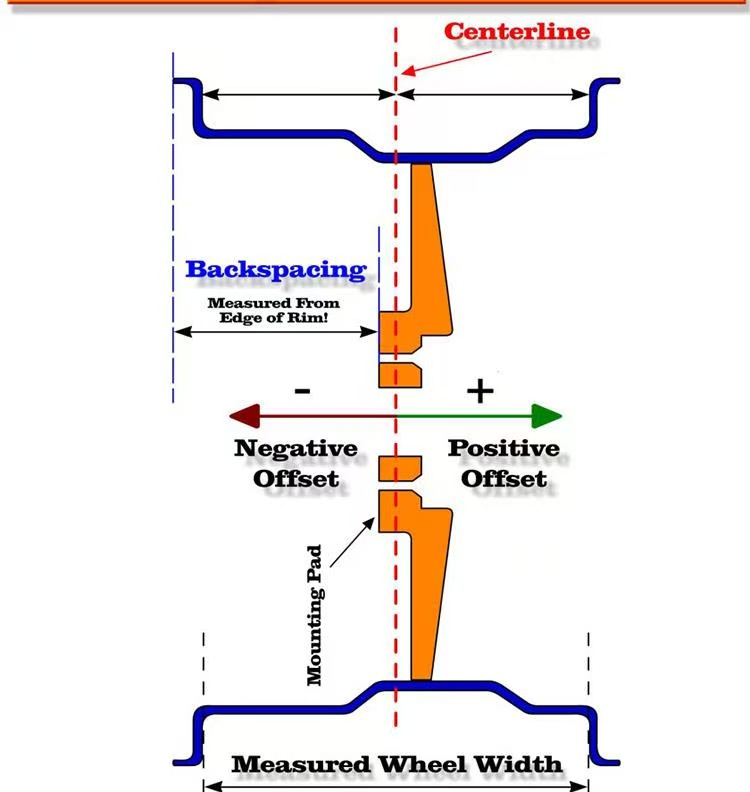
Offset (ET value) refers to the distance in millimeters from the wheel’s mounting surface to its centerline, serving as the core indicator for determining the wheel’s inward and outward position on the vehicle. A positive offset (+ value) positions the mounting surface closer to the rear of the wheel, tucking the wheel toward the inside of the wheel arch; a negative offset (- value) pushes the wheel outward, widening the track to improve cornering stability. Notably, wheel width (J value) directly affects the actual effect of the offset: for example, an 8J (8-inch wide) wheel with a +45mm offset protrudes outward by approximately 12.7mm (1/2 inch) more than a 7J wheel with the same +45mm offset, so it is essential to evaluate the wheel arch clearance in advance.
Backspace is the straight-line distance from the wheel’s mounting surface to its rear edge. A larger Backspace value means the wheel sits deeper inside the wheel arch, preventing interference with suspension components; an excessively small value may cause the wheel to rub against the fender. Essentially, Backspace and Offset describe the wheel’s position from different dimensions and can be converted into each other using formulas.

Core Conversion Formulas (Essential for Precise Customization)

Offset (inches) Conversion Formula

Offset (inches) = (J value × 25.4 ÷ 2 – ET value (mm)) ÷ 25.4

(Note: J value is the standard unit for wheel width, e.g., 7J, 8J; 1 inch = 25.4 millimeters)

ET Value (mm) Conversion Formula

ET value (mm) = (J value × 25.4 ÷ 2) – Offset (inches) × 25.4
Professional tuning technicians remind that when upgrading wheels, a comprehensive verification must be conducted in combination with the original factory parameters, suspension structure and tire size. Blindly pursuing a large negative offset for a “stanced” visual effect may increase the bearing load and shorten the service life of suspension components. It is recommended that enthusiasts first make preliminary calculations using the conversion formulas, then conduct fitment tests with professional tools to strike the perfect balance between visual appeal and driving safety.

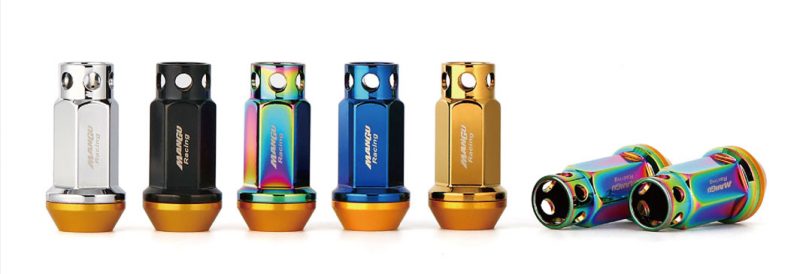
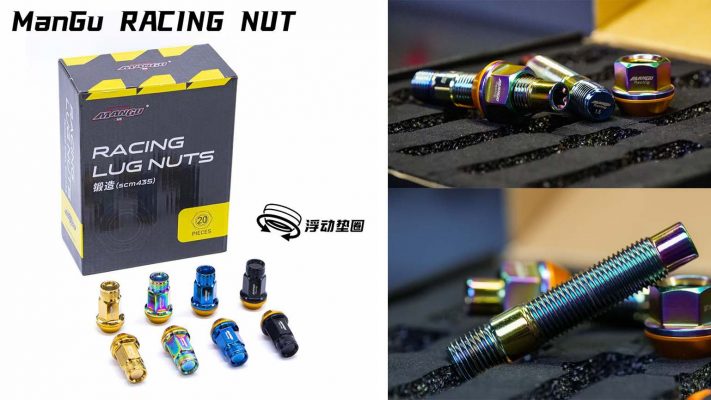
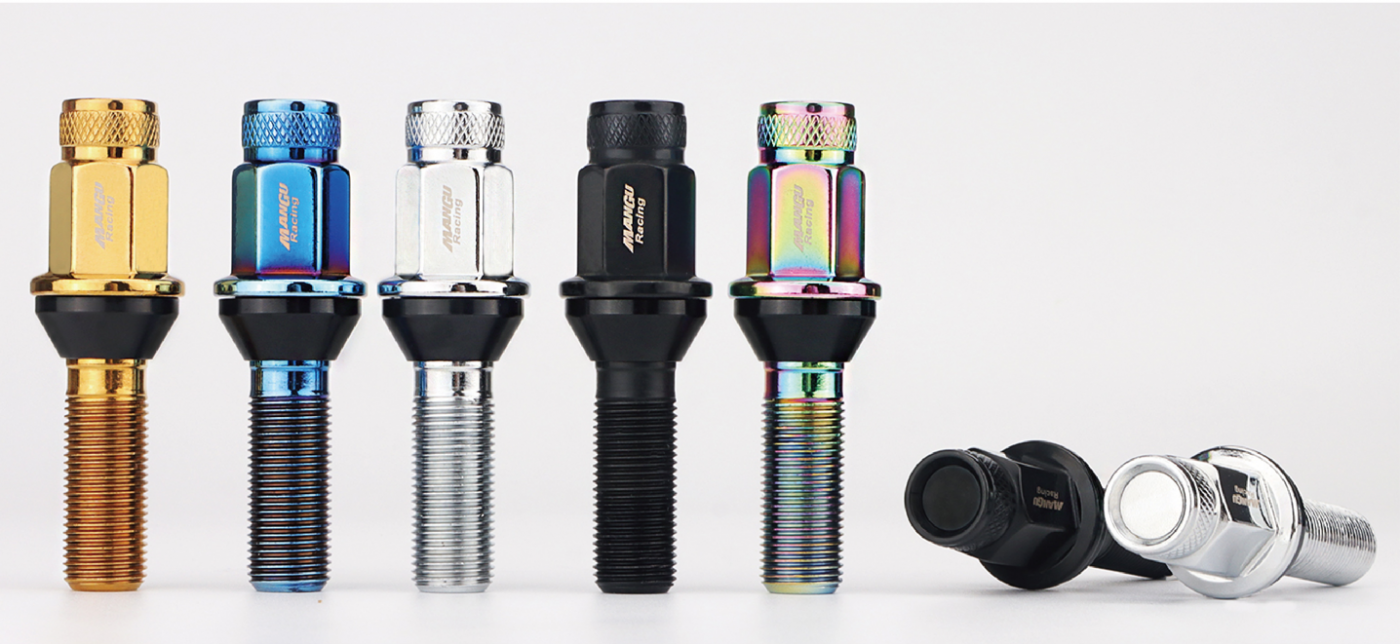
Small nuts, big impact

Proper Usage and Maintenance Methods for Wheel Mounting Nuts and Sockets of Racing Cars or High-Performance Modified Cars

Proper Usage Methods

Usage of Nuts

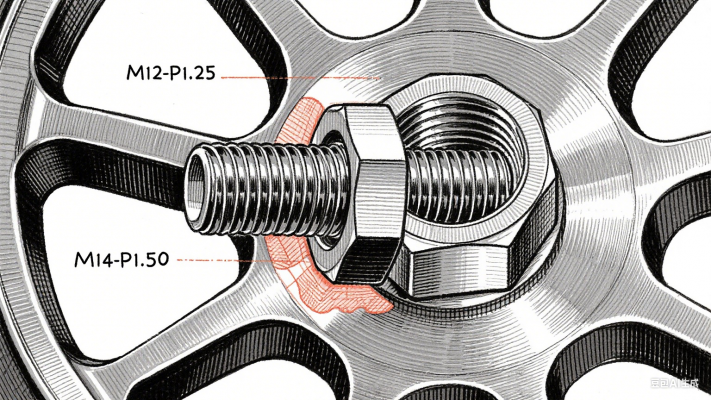
Preparation before Installation: Before installation, carefully check whether the threads of the nuts and bolts are intact, and whether there is deformation, damage or rust. If burrs are found on the threads, gently polish them with fine sandpaper; if there is serious damage, replace the nuts or bolts with new ones to avoid insecure installation due to poor thread fit. At the same time, ensure that the mounting surfaces of the wheel hub and wheel are clean and flat, free of oil and impurities. They can be wiped with a special cleaning agent to prevent impurities from affecting the fastening effect of the nuts.

Installation Operation: Put the nut on the bolt and screw it in gently by hand to ensure that the threads are properly engaged, avoiding thread damage caused by skew screwing. Then use a hexagonal socket with a torque wrench to tighten according to the torque value specified by the vehicle manufacturer and the tightening sequence (usually a cross-symmetric sequence, such as first tightening the nuts at the diagonal positions, then tightening the other nuts in turn). During the tightening process, apply torque slowly and reach the specified torque in 2-3 times to avoid uneven stress caused by one-time tightening.

Disassembly Operation: When disassembling, also use a hexagonal socket with a wrench and loosen the nuts in the reverse order of installation to avoid damaging the wheel hub or bolts due to excessive unilateral force. If the nut is difficult to disassemble due to rust, do not force it. You can first spray a special loosening agent and wait for a while before disassembling.

Usage of Sockets

Selecting a Suitable Socket: Ensure that the hexagonal socket completely matches the size of the nut, and the inner wall of the socket should be smooth and free of wear. Avoid slipping during use and damaging the hexagonal structure of the nut due to improper size or rough inner wall.

Correct Operation Method: When in use,please firmly place the socket cover over the nut to ensure a perfect fit with the nut, then apply force with a wrench. When applying force, keep the wrench and socket in the same straight line to avoid skewed force, which may cause the socket to bend or be damaged. After use, promptly remove the socket from the wrench to avoid random placement leading to damage from falling.

Maintenance Methods

Maintenance of Nuts

Regular Cleaning: After each use, timely clean the oil, dust and metal debris on the surface of the nut. You can use a brush dipped in an appropriate amount of kerosene or a special cleaning agent for cleaning, and dry it with a clean cloth after cleaning to prevent rust caused by residual impurities.

Inspection and Maintenance: Regularly inspect the appearance and thread condition of the nut to check for cracks, deformation, thread wear or rust. If the coating on the surface of the nut is found to fall off, conduct surface treatment (such as re-chroming) in a timely manner to enhance its corrosion resistance. For nuts that have been used for a long time or have undergone severe working conditions, it is recommended to conduct regular flaw detection to ensure that there are no hidden internal damages.

Proper Storage: When not in use, the nuts should be stored in a dry, ventilated environment free of corrosive gases. They can be placed in a special sealed box, and a desiccant can be placed in the box to prevent moisture and rust. Avoid mixing nuts with other metal parts to prevent mutual collision and wear.

Maintenance of Sockets

Cleaning and Maintenance: After use, promptly clean the dust and oil inside the socket. You can use compressed air to blow off internal impurities, then wipe them clean with a cloth. If the inner wall of the socket is oily, dip a small amount of cleaning agent for cleaning, then dry it.

Inspection and Maintenance: Regularly inspect the appearance and size of the socket to check for cracks, deformation or inner wall wear. If the socket is found to be damaged, replace it with a new one in a timely manner and do not continue to use it to avoid affecting the use effect and safety.

Storage Notes: Sockets should be stored by size classification, and can be placed in a special tool box to avoid mutual extrusion and collision. The storage environment should be dry to prevent the socket from rusting. At the same time, avoid exposing the socket to high temperature, humidity or corrosive environments for a long time.